The Perfect Winter Escape? Sardinia!

Sun, Surfing and Camping in Sardinia in Winter

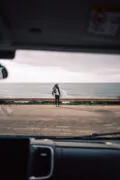
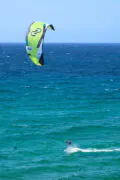
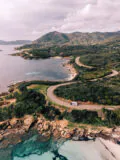
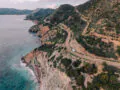
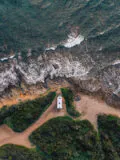
Sardinia over the New Year? Rarely anyone’s first choice – and that’s exactly why it’s such a smart idea. Photographer Moritz Reulein headed to the Mediterranean island with his surfboard and tells us why it’s so worth it – as well as the specific details on where and how to make it happen.

Why You Should Visit Sardinia in Winter:

  • It’s budget-friendly. Ferry prices are significantly lower than during the summer season, with tickets often available for under €100.
    Tip: We only booked a one-way crossing so we could be flexible with the return journey depending on the weather. Price-wise, it actually makes no difference.


  • It’s pleasantly warm in winter. Even in December and January, water temperatures hover around 15-18° C, with air temperatures between 12-20° C. It feels even warmer when the sun’s out. This means a 4/3mm wetsuit is usually sufficient.


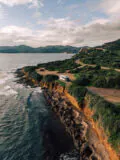
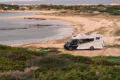
  • Incredible Italian cuisine and plenty to explore away from the crowds. You can enjoy the solitude, often having beaches completely to yourself with an almost Caribbean backdrop.


  • Prime swell season runs from October to April. Wave forecasts and weather on Sardinia can only be reliably predicted about three days out. Keep your eye on the west and northwest coasts, as well as the south. The most consistent winter swells come from W-NW.
The Top Tips for Surfers:

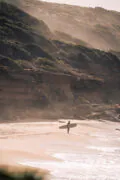
  • The Mistral can destroy spots quickly, BUT it also creates clean windows. Don’t just check wave height – always look at wind direction and local shelter. You’ll find a solid wave forecast at Swellbeat.


  • Sardinia is wind-exposed. To score good conditions, you need to understand the different wind patterns. Even small changes can have pretty major impacts. The forecasts from the Sardinian meteorological institute are particularly reliable, as they account for regional peculiarities. The graphical displays and animations on windy.com provide an especially clear overview of wind and wave conditions. You’ll also find wave and weather webcams there.


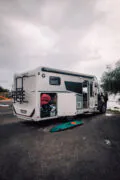
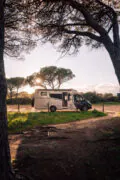
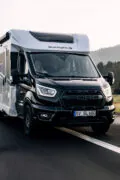
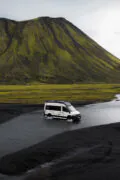
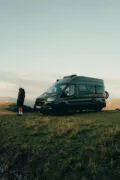
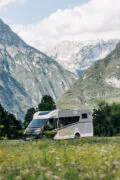
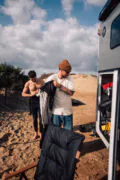
  • Winter in Sardinia means rapidly changing weather, so there is just one perfect way of traveling: be spontaneous with a camper van.

Top Tips for Campers in Sardinia:

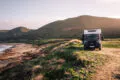
  • Many of the roads leading to the spots are gravel tracks – and they tend to get muddy after rain. A 4×4 vehicle is helpful but not essential. Usually, careful driving and checking the road on foot beforehand will do the trick.


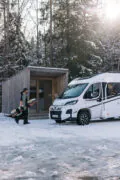
  • In winter, many campsites, showers, and water sources are closed. This means you really do need to plan for electricity and water – stock up on water, stay self-sufficient, and take advantage of any open sources when you find them.


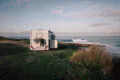
  • During winter months, wild camping is usually tolerated – that is if you follow proper etiquette and don’t display camping behaviour as setting out gear. There are rarely opportunities to dispose of trash, so it’s best to look up recycling centres online.

The Best Surf Spots:

  • Porto Ferro near Alghero: the most famous surf spot in the Northwest. The bay works particularly well during Mistral conditions and typically delivers decent waves that remain surfable even in wind. You’ll mostly be surfing over sand, and the rocky areas to the south help stabilize the sandbars. Currents can develop with larger swells.
    The waves are rather mellow and gentle, making them ideal for beginners.


  • Capo Mannu sits roughly in the middle of the west coast and is a prominent headland hosting some of the coast’s most renowned spots. It’s also one of Sardinia’s most demanding areas, famous for its powerful, often hollow right-hand reef breaks that can get very large with strong swells. The waves break over rock, are fast, punchy, and strictly for experienced surfers. Under the right conditions, you’ll find some of the island’s best and most consistent waves – but expect currents, sharp reefs, and little margin for error. Beginners have no business here.


  • The beach break at Buggerru in the southwest faces northwest and is highly swell-sensitive, making it one of the island’s most consistent spots. However, with stronger northwest Mistral, the waves quickly get messy, which is why the beach break at San Nicolò to the north is often the better choice for cleaner conditions. Waves at Buggerru break powerfully and fast.


  • Not far from Buggerru you’ll find Spiaggia di San Nicolò and further north, Portixeddu, where a hill provides some wind protection. It can also influence wind direction, sometimes turning northwest winds into northeast. As with all beach breaks, the sandbars are crucial for wave quality. With bigger swells, especially the right can work well, though this demands plenty of paddling and frequent duck-diving.


  • The South: Around Chia, you’ll find beautiful spots. East of Cagliari is Racca Point, a famous southern spot where you should keep an eye on South-Eastern swells.

Recommended Winter Parking:

  • Porto Ferro: There are several parking lots, however they are quickly full over summer. Plus, there have been reports of break-ins. So generally, you should check reviews on Park4Night or Google to see how safe the place is.


  • Rena Majore with parking located directly at the beach.


  • Porto Palmas: A dirt road leads north from the beach to some beautiful spots.


  • Sa Mesa Longa Spiaggia: Parking at Putzu Idu. You can walk just 5 minutes to a riding stable with a fantastic pizzeria.


  • Piscinas (Spiaggia di Piscinas): A beautiful, large beach with many dunes, but do not approach from the north – otherwise, you face two river crossings and the road becomes very narrow. Instead, go via Ingurtosu, which you can drive even with a camper van.


  • Buggerru: In a fantastic setting right on the beach. the pitch is open year-round, including supply and disposal services.


  • Sant’Antioco Island: Costiera di Macori & Spiaggia Grande (in the north of the bay).


  • Is Solinas: There is a pitch here with disposal and supply services as well as a nice bar. AND it is also perfect for watching flamingos.


  • On the East Coast: BudoniBaia BolmoBeach Chiosco Bar Porto Ainu. This is perfect for the night before the return ferry. It takes you about 30 minutes from there to Olbia.

Tips & Trips

Tips & Trips More

Chasing Sun and Trails: A Winter Escape to Spain

Follow the Sunlight: Traveling to Spain by Camper & Bike in Winter

To the story

T 58: OUR SMALLEST MODEL WITH MAXIMISED SPACE

The T 58 is our shortest semi-integrated motorhome, yet it's one with great spaciousness.

To the story

The Mystical Magic of the Faroe Islands

With the IBEX through mystical landscapes and rugged coastlines

To the story

Bike road trip from the Alps to the sea

From Swiss mountain passes to the Mediterranean

To the story

NORTHERN EXPOSURE

A SKI TOURING TRIP TO NORWAY

To the story

Autumn Vibes: Bike Flow & Dolomites Glow

Bike Road Trip in the Dolomites

To the story

FIRE & ICE: The Ultimate Iceland Road Trip

No limits. No roads. Just the IBEX – and Iceland.

To the story

Extreme Alpine Crossing: Two Women, One Mission

2,000 km across the Alps

To the story

Heating in Your Campervan: Which One Is Right?

Gas, diesel or electricity – find the ideal heating for your camper

To the story

Finding freedom

E-Biking in Romania.

To the story

Our Latest Motorhome Highlights

More berths, more storage, more freedom.

To the story

Guide to Sardinia

The perfect round trip for kite surfers

To the story

CLIFF 540 V – VANLIFE. Unlike any other.

Our three-room apartment on wheels!

To the story

Cornwall Roadtrip: the best spots, the best tips

Discover Cornwall like a local – by campervan along surf beaches, cliffs and coastal towns.

To the story

GREENTREK – The Young Maverick

Time to leave your comfort zone and head into the wild.

To the story